You need to talk about what happened.
You want to revisit what the doctor said, what you saw on the ultrasound, and the moment you realized the pregnancy was not going to end as you had hoped.
But your partner doesn’t seem to want to talk.
They become quiet, return to work, focus on practical matters, or change the subject when you bring up the loss.
You may wonder:
How can you act as though nothing happened?
Don’t you miss our baby?
Why am I the only one who seems devastated?
Meanwhile, your partner may be thinking:
I don’t know what to say.
Nothing I say makes this better.
If I start talking about this, I’m afraid I’ll fall apart too.
Two people can grieve the same loss and yet seem to inhabit completely different emotional worlds.
Pregnancy loss can be associated with significant grief, anxiety, depression, and trauma-related symptoms that sometimes persist long after the loss (Daugirdaitė et al., 2015; Farren et al., 2018).
When partners express that grief differently, they may begin to misunderstand each other—creating distance precisely when both need connection.
The Same Loss, Different Ways of Grieving
Pregnancy loss is a shared event, but it is not necessarily an identical experience.

For the person who carried the pregnancy, the loss may be profoundly physical as well as emotional. Hormonal changes, medical procedures, and physical reminders may continue after the pregnancy has ended. The loss may also disrupt an already developing bond with the baby and an imagined future.
The other partner may have shared those hopes and dreams but experienced the pregnancy differently. They may now find themselves trying to support their grieving partner while struggling with their own feelings of sadness, helplessness, or loss.
Research on pregnancy loss has found that non-birthing partners, particularly men, may experience significant grief while feeling pressure to remain strong, prioritize their partner’s needs, or contain their own emotions. Their grief may also receive less recognition from others (Due et al., 2017; Obst et al., 2020; Williams et al., 2020).
Different expressions of grief do not necessarily mean different levels of pain, attachment, or love.
Why One Partner Needs to Talk
For some people, talking is an important way of processing grief.
They may need to revisit what happened, share memories, express guilt or anger, or speak about the baby they had already begun imagining.
But the need to talk may also reflect something deeper.
Reaching for a partner can be an attempt to restore emotional safety.
Underneath “I need to talk about this” may be questions such as:
Are you still here with me?
Do you understand how much this hurts?
Am I going to have to carry this alone?
Attachment research suggests that experiences of threat and loss can intensify our need for closeness, reassurance, and responsiveness from important attachment figures (Johnson, 2019; Mikulincer & Shaver, 2016).
The partner who keeps talking may not simply be dwelling on the loss. They may be trying to feel less alone in it.
Why the Other Partner Shuts Down
The quieter partner may also be overwhelmed, but their response looks very different.
Instead of talking, they become practical, return to routines, keep busy, or withdraw emotionally.
To their partner, this can look like indifference.
Yet silence may reflect helplessness, emotional overload, or uncertainty about how to respond.
Research on men’s experiences after pregnancy loss has identified emotional suppression, pressure to support the birthing partner, and limited opportunities to express their own grief (Due et al., 2017; Obst et al., 2020; Williams et al., 2020).
What appears to mean:
“I don’t want to talk about it.”
may actually mean:
“I don’t know how to talk about it.”
“I’m afraid I’ll make things worse.”
“I’m hurting too, but I don’t know how to show you.”
These are patterns, not gender rules. The person who carried the pregnancy may withdraw, while the non-birthing partner may be the one seeking conversation and reassurance.
Neither response, by itself, tells us who is grieving more.
When Different Coping Styles Become a Negative Cycle
The difficulty often begins not with the differences themselves, but with the meaning partners give each other’s responses.

Imagine this exchange:
Partner A: “Why won’t you talk about our baby? It feels like you don’t care.”
Partner B: “Of course I care. I just don’t know what to say.”
Partner A: “I feel so alone in this.”
Partner B: “And I feel like nothing I do is enough.”
The more one partner reaches for connection, the more the other withdraws. Both end up feeling misunderstood and alone.
What began as different ways of coping has become a painful cycle of disconnection.
The Problem Isn’t Either Partner—It’s the Cycle
Emotionally Focused Therapy (EFT) helps couples understand these interactions through an attachment lens.
Rather than asking who is grieving correctly, we explore what happens between partners when both are hurting.
The partner who reaches may be frightened of being alone.
The partner who withdraws may feel helpless, inadequate, or afraid of making things worse.
Both may be trying to protect themselves, but their protective responses inadvertently intensify the other’s distress. This pattern is consistent with the attachment-based understanding of negative interactional cycles in EFT (Johnson, 2019; Mikulincer & Shaver, 2016).
The cycle becomes the problem—not either partner.

When couples begin to recognize the vulnerable emotions beneath their reactions, a different conversation becomes possible.
Instead of:
“You don’t care.”
One partner might say:
“When you get quiet, I feel frightened that I’m alone in this. I need to know you’re still here with me.”
And instead of withdrawing:
“I get quiet because I feel helpless. I don’t know how to make this better, but I’m hurting too.”
The loss hasn’t changed.
But the partners are beginning to understand each other differently.
And that is where reconnection can begin.
You Don’t Have to Grieve the Same Way to Heal Together
Understanding the negative cycle is an important first step. But recognizing what happens between you is only the beginning.
The next step is learning how to reach for each other differently.
After pregnancy loss, partners do not need to express grief in the same way. One may find comfort in talking, while the other needs more time and quiet. What matters is whether both can begin to recognize and respond to each other’s emotional needs.
Research on pregnancy loss highlights the importance of acknowledging both partners’ experiences, although research specifically examining couple-based interventions following perinatal loss remains limited (Kendrick & Sterrett-Hong, 2026; Obst et al., 2020).
Why Self-Regulation May Not Be Enough
Learning to manage overwhelming emotions is an important part of coping with pregnancy loss. But some of our deepest distress involves questions that cannot be answered entirely on our own:
Are you there for me?
Can I count on you when I’m hurting?
Am I alone in this?
Attachment research suggests that close relationships play an important role in emotional regulation, particularly during experiences of threat and uncertainty (Mikulincer & Shaver, 2016).
In a landmark study, Coan and colleagues (2006) found that holding a spouse’s hand reduced neural responses to anticipated threat, particularly among women reporting higher marital quality. Although the study did not examine pregnancy loss, it illustrates how supportive relationships can influence our experience of threat.
Self-regulation helps us manage our own distress. Co-regulation allows us to experience safety and support through connection with another person.
This doesn’t mean that partners must always be emotionally available or that one person is responsible for regulating the other’s feelings.
It means that sometimes the most healing response is not advice, reassurance, or a solution—but the experience of not being alone.
What Emotional Responsiveness Looks Like After Pregnancy Loss
In Emotionally Focused Therapy (EFT), secure attachment is often described through three essential qualities: Accessibility, Responsiveness, and Engagement (A.R.E.) (Johnson, 2019; Sandberg et al., 2012).
In everyday language, these qualities answer three important questions:
- Accessibility: Can I reach you when I need you?
- Responsiveness: Will you notice and respond to my pain?
- Engagement: Will you stay emotionally present, even when things are difficult?
After pregnancy loss, emotional responsiveness does not require perfect words.
Sometimes it means sitting beside your partner while they cry, listening without trying to fix anything, or acknowledging a loss that others may no longer mention.
Instead of:
“We have to move forward.”
A partner might say:
“I know how much this hurts. I’m here with you.”
Instead of offering solutions:
“I wish I could make this different. I miss our baby too.”
These moments may seem small, but they can begin to change how partners experience each other.
Research involving EFT has found that changes in attachment relationships can influence neural responses to threat in the presence of a romantic partner (Johnson et al., 2013). Although this research was not specific to reproductive trauma, it supports the broader importance of emotional connection in regulating distress.
Emotional responsiveness doesn’t take away grief. It can make grief less lonely.
How Couples Begin to Reconnect
In EFT, we help partners move beyond their protective reactions and share the more vulnerable emotions underneath them (Greenman & Johnson, 2012; Johnson, 2019).
For example, the partner who previously said:
“You never want to talk about our baby.”
might begin to say:
“Sometimes I need to talk about our baby because I’m afraid of feeling alone with this loss.”
And the quieter partner might respond:
“I don’t always know what to say, but I want you to know I’m grieving too. I want to be here with you.”
The goal is not to eliminate differences or require both partners to become equally expressive.
It is to create a relationship in which different ways of grieving no longer have to mean emotional disconnection.
Emotionally Focused Therapy helps couples recognize their negative interactional cycle, understand the attachment needs beneath their reactions, and develop new experiences of emotional responsiveness (Greenman & Johnson, 2012; Johnson, 2019).
Research specifically evaluating EFT for pregnancy loss remains limited, but its attachment-based approach offers a useful framework for understanding and addressing relational distress after reproductive trauma.
Healing Together Doesn’t Mean Forgetting
Pregnancy loss may change how partners experience themselves, their bodies, their relationship, and the future they had imagined.
Healing does not mean forgetting the pregnancy, minimizing the loss, or finding something positive in what happened.
Nor does it mean that both partners will grieve on the same timeline.
One may need to talk about the baby years later. The other may experience grief privately or unexpectedly. Both experiences can have a place in the relationship.
What matters is developing enough emotional safety to make room for those differences.
You don’t have to grieve the same way to heal together.
And sometimes, the most meaningful change is simply knowing:
“We are hurting differently, but we don’t have to carry this alone.”
Watch My Webinar: Reproductive Trauma—When Love Isn’t Enough
If pregnancy loss has created distance between you and your partner, I invite you to watch my recorded webinar:
Reproductive Trauma: When Love Isn’t Enough
Why Coping Alone Can Push Partners Apart—and Connection Helps Them Heal
I explore how reproductive trauma affects emotional regulation, attachment, and couple relationships—and how connection and co-regulation can support healing.
Couples Therapy After Pregnancy Loss and Reproductive Trauma
If pregnancy loss has left you and your partner feeling disconnected, couples therapy can help you understand the patterns keeping you apart and begin rebuilding emotional safety.
I am a licensed psychologist and Certified Emotionally Focused Therapist specializing in women, couples, and reproductive trauma.
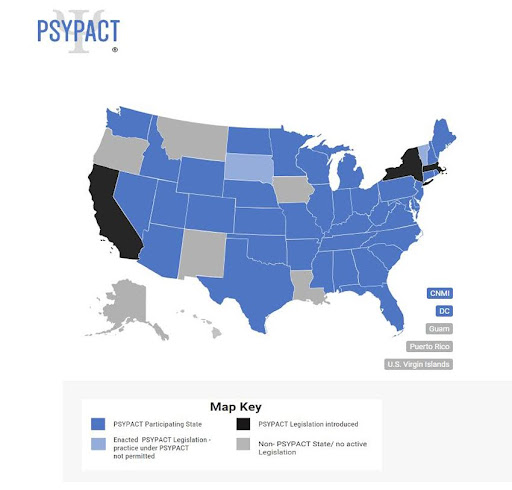
I offer in-person couples therapy in The Woodlands and the Houston area, along with online therapy for clients in Texas, New York, and participating PSYPACT states.
Email me at irena@permalink.com to schedule Free-10-minute consultation.
References
Coan, J. A., Schaefer, H. S., & Davidson, R. J. (2006). Lending a hand: Social regulation of the neural response to threat. Psychological Science, 17(12), 1032–103
Daugirdaitė, V., van den Akker, O., & Purewal, S. (2015). Posttraumatic stress and posttraumatic stress disorder after termination of pregnancy and reproductive loss: A systematic review. Journal of Pregnancy, 2015, 646345.
Due, C., Chiarolli, S., & Riggs, D. W. (2017). The impact of pregnancy loss on men’s health and wellbeing: A systematic review. BMC Pregnancy and Childbirth, 17, 380.
Farren, J., Mitchell-Jones, N., Verbakel, J. Y., Timmerman, D., Jalmbrant, M., & Bourne, T. (2018). The psychological impact of early pregnancy loss. Human Reproduction Update, 24(6), 731–749.
Greenman, P. S., & Johnson, S. M. (2012). United we stand: Emotionally focused therapy for couples in the treatment of posttraumatic stress disorder. Journal of Clinical Psychology, 68(5), 561–569.
Johnson, S. M. (2019). Attachment theory in practice: Emotionally focused therapy (EFT) with individuals, couples, and families. Guilford Press.
Johnson, S. M., Moser, M. B., Beckes, L., Smith, A., Dalgleish, T., Halchuk, R., Hasselmo, K., Greenman, P. S., Merali, Z., & Coan, J. A. (2013). Soothing the threatened brain: Leveraging contact comfort with emotionally focused therapy. PLoS ONE, 8(11), e79314.
Kendrick, J. I. S., & Sterrett-Hong, E. (2026). Navigating loss together: A scoping review of couples therapy interventions for perinatal death. OMEGA—Journal of Death and Dying, 92(4), 1799–1819.
Mikulincer, M., & Shaver, P. R. (2016). Attachment in adulthood: Structure, dynamics, and change (2nd ed.). Guilford Press.
Obst, K. L., Due, C., Oxlad, M., & Middleton, P. (2020). Men’s grief following pregnancy loss and neonatal loss: A systematic review and emerging theoretical model. BMC Pregnancy and Childbirth, 20, 11.
Sandberg, J. G., Busby, D. M., Johnson, S. M., & Yoshida, K. (2012). The brief accessibility, responsiveness, and engagement (BARE) scale: A tool for measuring attachment behavior in couple relationships. Family Process, 51(4), 512–526.
Williams, H. M., Topping, A., Coomarasamy, A., & Jones, L. L. (2020). Men and miscarriage: A systematic review and thematic synthesis. Qualitative Health Research, 30(1), 133–145.